| |
Rats! rats! rats!
 |
You'd think after 'the risks of lead poisoning' I would stay away from creepy subjects? I'll try keep it fun and upbeat. But in fact this is panning out to be a banner year for rats. There's a fair chance one of your clients could be hit.
Wouldn't it be nice to give them some hope and information, like some Crazy Fun Rat Facts? |
Nobody wants to admit to having rats, but there are clear signs that indicate an infestation. You won't see them, they're too good at hiding. If you haven't been lucky enough to have seen rat poop, it's a little bigger than a quarter of an inch long and looks like a fat black grain of rice. I know, I know. yuk. Also they gnaw holes around the edges of doors, and cabinets they want in to. It looks uneven and raggedy, like someone went after it with a cheese grater.
Crazy Fun Rat Fact #1 An adult rat can fit through a hole the size of a quarter.
The first best defense against rats is -don't let them in. Every single hole in the structure needs to be plugged, any eradication efforts that don't address this issue are an absolute waste of time.
Don't be afraid of trapping them inside, if rats can freely pass in and out they are less subject to trapping. If you manage to seal all the entries you might be lucky and lock them out. If the rat is trapped inside he will have limited food and be more easily tempted by your bait. Plug the holes in the boat before you start bailing it out.
 |
Crazy Fun Rat Fact #3 Rats as gormands? a friend has just been addressing a nasty rat problem. The contractor found the entry points and was removing wall insulation the rats used for nesting and found a huge pile of snail shells. The rats were going out to the garden, grabbing snails, and bringing them back inside to feast. Escargot sushi! |
To keep them out, seal cracks and openings in foundations, drains, water pipes, cabling, and vents. No hole larger than 1/4 inch should be left unsealed - to exclude both rats and house mice. Make sure doors, windows, and screens fit tightly. Wire screen and lightweight sheet metal are excellent barriers. Coarse steel wool is good for gaps and holes. Other typical entry points are vent screen tears, a loose crawlspace cover, broken window screens, missing spark arrestor, roof vents with no screens, loose fitting exterior doors (like the garage), openings around the dryer vent, pet doors, and just leaving the doors open (like the side door to the garage.)
Crazy Fun Rat Fact #2 One pair of mature rats can increase the population by 1600% (that's 50 to 70 rats) over the course of a single year. Don't even think about the next year when their children will be reproducing at the same rate.
Most exterminators will choose a traditional snap trap over poisoning, electric traps, or sticky pads. The problem with poisoning is even if the rat takes the bait, no one knows where he will end up. Quite often in an inaccessible cavity in your walls, making a stinky nuisance of himself. Rats are smart enough to eat a small amount of a new food, and then stay away from it if it makes them ill. That's why poisons don't always work. A snap trap is grisly but at least itis easy to dispose of. Electric traps are quite a bit more expensive and sticky pads not be strong enough to hold a determined rat. Cats, even if they are interested, are rarely up to the task of tackling an ongoing infestation.
In case you were wondering – a snap trap still looks just like the old fashioned cartoony trap you are imagining, only much bigger.
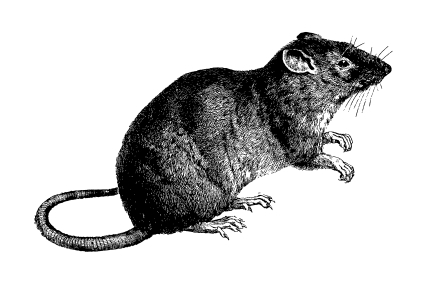
This year increased rain means more greenery and that's more places for one kind of rat to hide -the roof rat. He is sleek, grey to white, and about a half a pound with big ears. The smaller of the rats in our area, they're the ones in the attic. They can nest in ivy and palm trees, anything close to the house. Nutritionally sophisticated, their preferences are primarily fruits, nuts, and berries, with the occasional slug or snail. They may be feeding out of doors and living inside, or vice versa, and will travel up to 300 feet for their supper.
The other rat to watch out for is the wharf or norway rat. They are subterranean, stubbier and large -up to a pound. They are grey, stronger than the roof rats and have small ears. Pretty healthy eaters too, they prefer cereal grains, meats, fish, nuts, and some fruits. They prefer dining locally, only about 150 feet from home.
Crazy Fun Rat Fact #4 Rats have been proven to make a laughter-like noise when tickled (unable to be heard by the human ear alone), they also dream while sleeping. I'm not sure how that fun fact is useful, but I thought it was awfully interesting. It begs the question, what does a rat think is funny?
© 2011 |
 |
If you'd like some more information on rats, this is a great source:
UC Davis rat info
And if you were doubtful about the giggling rats, watch this: Rat science video |
|
